“It’s surely our responsibility to do everything within our power to create a planet that provides a home not just for us, but for all life on Earth.” Sir David Attenborough.
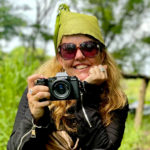
My first full-on wild life experience was being covered with wet mud to encourage a baby orphaned elephant to do the same and stop the little fella from getting sun burnt. Feeding him with a giant bottle of milk every three hours was hilarious as he saw me as his mother nudging me with his trunk for cuddles or a little treat. Engaging with nature, rather than looking at it from a distance through binoculars, was as the result of watching Sir David’s inspiring wildlife programmes with my own mum. His gift to TV was taking all of us along with him inside the story he was covering. Being sandwiched between two Gorillas and not being sure what would happen next made landmark TV. More recently identifying that the wild is everywhere, including capital cities like London.
As for so many other young people, Sir David, who turns 100 this year, was hugely influential. Around the world so many were inspired to brake the old expected career paths, choosing a career in wildlife as photographers, writers, naturalists, marine researchers and artists. In my case photojournalism and moving to Sri Lanka, where wild elephants became a way of life, often blocking the main road on the school run.


Sir David’s ground breaking programmes inspired me. I am currently researching twenty eight of Nature’s Wild Characters and what they teach us from living in Sri Lanka’s many different wild spaces. The book explores how travellers can connect to these incredible studies and stories – helping us all to share the importance of everything from the superheroes of the skies, bats, to the ancient mariners of the sea, turtles. But I am far from alone in my adoration of this living legend. He has influenced us all in one way or another, through over seventy years of making ground breaking wildlife documentaries, which brought otherwise hidden worlds into sight and gave nature a voice.
For the children of Sri Lanka – one of the worlds most biodiversity rich islands – he has been not only an inspiration to look after their amazing wildlife, but also a guiding light on the importance of protecting their greatest asset. A career that started by accident at the age of 28, Sir David quickly understood the power of visually engaging people by being involved in the story, with his film crew capturing up close and personal stories that gave us real insight into so many species. His incredible eye for unique angles has caused a seismic shift in how we see all life on earth, emotionally grabbing our attention in order to proactively inspire all of us to both engage and change our ways to protect the planet for future generations.
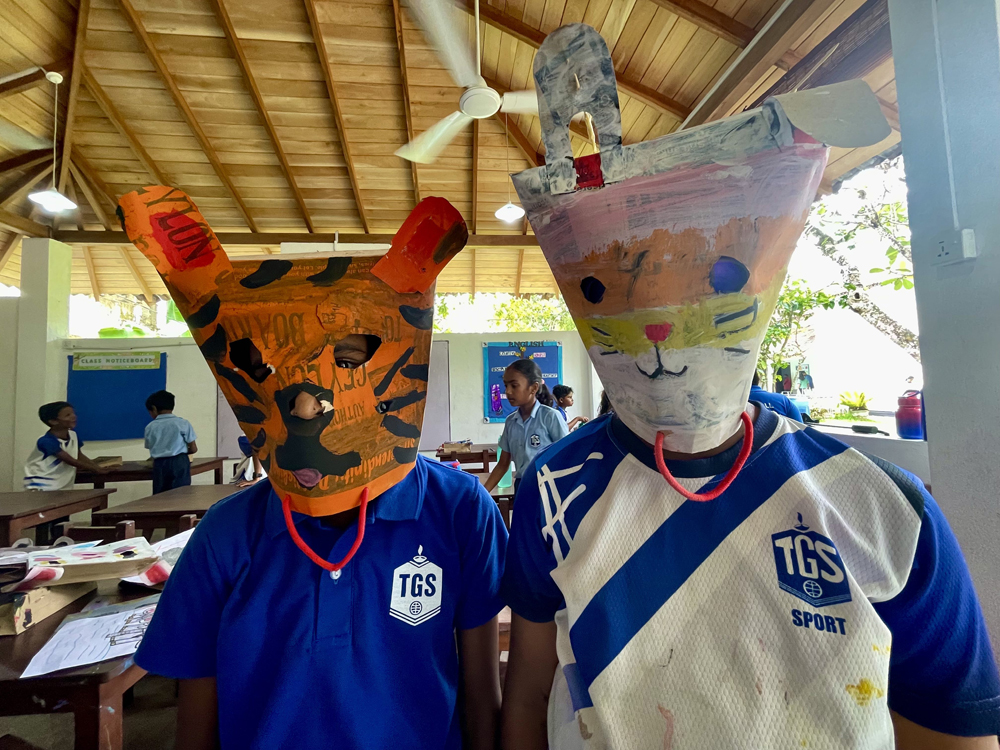
To mark his centenary, Sri Lankan school children wanted to celebrate 100 years with something truly special by making wildlife masks with me and writing stories with their incredibly dynamic teachers at Thomas Gall School (TGS), Sri Lanka’s first green School, about different encounters they had with nature. They decided as a birthday gift from the island to draw and paint 100 different species that can be found both on the land and in the oceans around Sri Lanka.


The work was so impressive that I joined forces with an artist John Vincent and an award winning London book designer Ben Prior to create a wildlife spotting poster to commemorate alongside these school children’s work; a call to action for all of us to rewild our hearts.
Travelling around capturing the huge variety of mammals, birds and marine life in Sri Lanka presented many challenges – going to wild remote places with Kulu Safaris, eye balling water buffalos at eye level in canoes and experiencing first hand the highway elephant thief, that was made famous by Attenborough in November 2024.


When photographing a peacock for the children’s wildlife art classes I had to wait for hours whilst it dried its feathers in a tree and made a mating call. Even then there was more waiting until peahens arrived and I could capture its mesmerising courtship dance and display of feathers – something that Sir David describes as the ultimate in sexual selection. But as any good wildlife photographer will tell you, patience is an essential part of the toolkit.
Sir David highlighted their colourful eye spots on TV, which are used to gain the attention and interest of the rather dull looking peahens. The more spots the more interest the male achieves with his mating rituals. This includes a fast moving booty-wobbling rhythmic dance and feather trail display that’s so memorable that it captured the artist John Vincent’s focus. He then used it for the heraldry of the ‘Pick Sri Lanka, Choose a Wildlife’ poster produced to inspire kids in schools all around the world to help protect and explore this incredible place.


So important are peacocks feathers in Sri Lanka, that they are given like flowers as an offering at a Hindu Kovil to protect the community from the evil eye. John, the poster artist, explains the images on the painting are a result of being “deeply touched by natures most delicate beauty in the wing of a dragon fly, the strange striations of tooth in the mouth of a turtle, the eyelash of a monkey captured on film looking back at you through the trees and the wonderful fear of standing in the jungle feet away from a grumpy tusker whose powerful presence in just one look will make you instantly back away.”
Sir David draws us into loving even the smallest creatures; the butterflies, bees and all sorts of strange insects, including the termites that swarm in the most spectacular way. He sees them as natures ultimate architects and engineers. This fascination for both small and large species has inspired his conservation messaging. In his programme on The Edge of Existence he used a love for amphibians to highlight the global crisis among frogs, which are the barometer of a healthy environment.


The Mountain Hourglass Tree Frog needs, he explains, pristine rainforest to survive and in Sri Lanka they can be found in protected areas, often near people. For example you can see them at the Jetwing Kurulubedda retreat in Galle. Here I photographed different frogs before they hop out of the mud onto a lily pad and vanish into the undergrowth. To my amusement one huge Hourglass Tree Frog took refuge in my open air bathroom and seemed to sing to me each night as I showered – soulful notes of music, that are, according to Attenborough, intended to get the attention of females. It certainly worked!
One of the more amusing wildlife stories is Sir David’s coverage of a cheeky elephant Raja, who Attenborough describes on instagram: “He doesn’t wait patiently by the roadside. Instead, he uses his four-tonne body to create a roadblock and demand a toll. When he receives a payment, he lets you pass.” From the local religious perspective, Raja the elephant is reminding us that a little giving is a good thing for all of us, and where better to position himself than on the way to the holy of holies, Kataragama. The character of this mischievous elephant was brilliantly captured by Sir David when narrating the story of this specific bull named Buttala Raja – the name means king – and he certainly rules over this area.


Labelled by Attenborough in 2024 as the “highway thief”, he’s now teaching other wild elephants similar tricks along the Buttala-Kataragama road. The only way to pass them is to pay a food toll if any driver wants to continue on their journey. Raja had cleverly learnt years ago to stop buses, motorbikes, motorists and even the local police to solicit bananas and anything he can get his trunk on – curling it around the bus windows. With my vehicle, he had a good sniff in everyone’s back packs and camera bags to see what hidden morsel is inside. If it’s an open sack of rice he will hoover it all up in no time. It gave me the opportunity to capture in photographs what it was like to have the King of elephants’ trunk rummaging around in my bag inside our vehicle. He even to tried to unlock the door and always with the biggest grin on his face!
Attenborough’s film crew clearly love the island as they have covered many experiences from turtles to capturing dramatic freshwater encounters, like in Yala National Park with a sly mugger crocodile, that has a penchant for deer for dinner. Filming the crocodiles game of playing hide and seek using the mud as cover showed how cunning nature can be by using a drying out waterhole as mud-camouflage to ensnare its prey. A clever strategy to ambush the unsuspecting spotted deer. Muggers are famous for many devious acts including leaving greenery and twigs on their heads so they can catch unsuspecting birds for a mid morning snack.


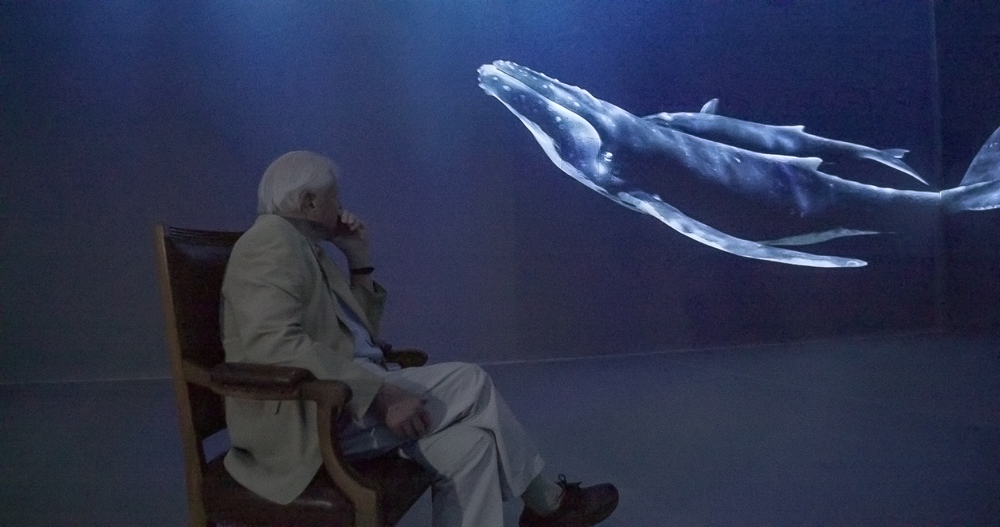
Whether on land or in the ocean, Attenborough takes us to places that many of us will never have the opportunity to see. Including the home for many whale species. In 2017 Attenborough brought to life the social gathering of sperm whale super pods found in the waters off Trincomalee. Since the seventies his filming helped take the species from the verge of extinction to healthy numbers today. All of this is highlighted in the Natural history Museum immersive cinematic experience with Sir David telling ‘Our Story’. You can book and visit it through the summer.
Last year for his 99th Birthday ‘The Ocean’ film was screened in Colombo and all around Sri Lanka featuring Sir David’s narration on the importance of protecting the marine world from over fishing. It showcased the immense beauty and fragility of Sri Lanka’s spectacular ocean ecosystems. It was a deeply confronting message emphasising the sea can bounce back, but only if we all start protecting its marine life from threats like industrial scale fishing, climate change, and plastic mountains forming islands… there is so much of it: “If we save the sea, we save our world”.


Over the years his filming has raised millions to protect wild spaces, in particular acre upon acre of rainforest. His ability to give the wild a future has been the catalyst of many exciting rewilding projects around the world, and bringing forty new species to public attention including my favourite the ghost frog.
The owner of Jetwing Hotels, Hiran Cooray, has personally re-wilded a great many areas across the island, including creating the multi award-winning Jetwing Vil Uyana inspired from the London Wetlands project.


He has sent an invite from Jetwing Hotels to host Sir David Attenborough as a birthday gift from the island. It would be wonderful if, like the naturalist in the photo at Jetwing Lighthouse who leads the daily beach safaris and clean ups, that more females consider this as a serious career. A visit from Sir David will certainly encourage more young people to work with nature and build nature trails. As biodiversity warriors, children can learn how to protect all species long term, from the deep sea to the rich jungle canopy.
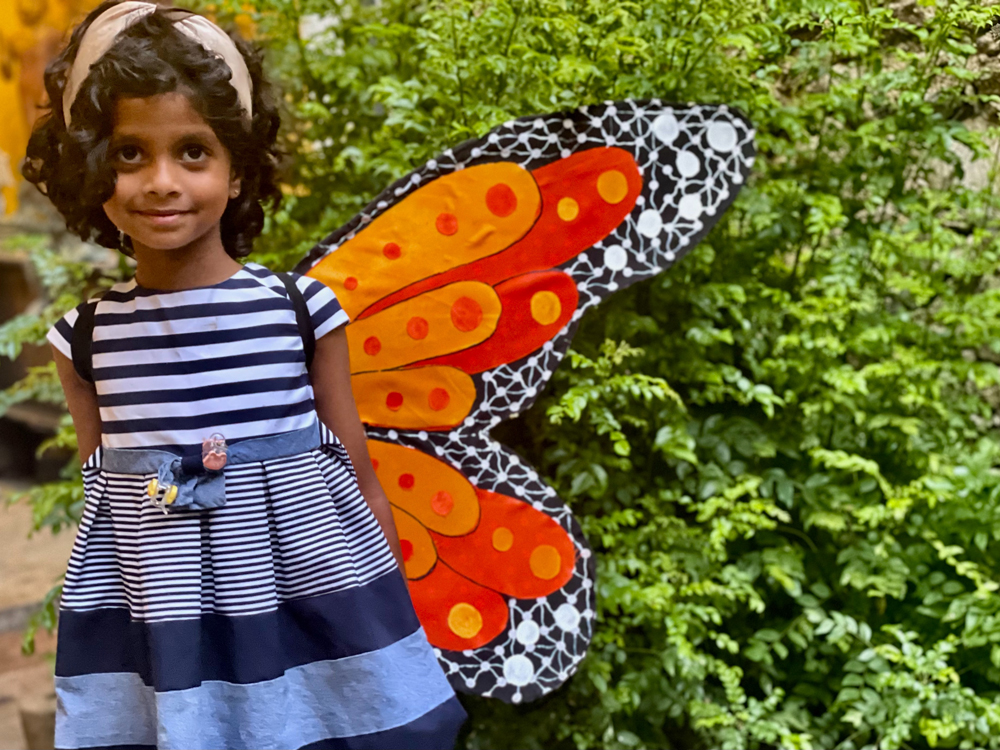
Sandesha, whose names means messenger, is a student at TGS. She is deeply passionate about butterflies saying “I want everyone to connect with them and every living thing.” Her detailed Monarch butterfly wings demonstrate her deep love for the simple beauty of nature. She explains, as she flutters around, that…
Butterflies make me feel safe and calm. The patterns on their wings feel like magic, like something alive with moving colours, that follow me around, showing me the way. If we follow them I know we will find out how we can be together.”
Other lovers of nature at TGS would love Attenborough to travel to Sri Lanka in his 100th year and set up a Guardians award to inspire all young people to protect it. Of course, he maybe subject to a toll charge by the highway thief Raja, but along the way he will discover many other amusing filming opportunities to share with his nature loving audiences worldwide. For example, the latest research on the world’s smallest cat, being documented at Malabar Hills, or the singing fish in Batti.
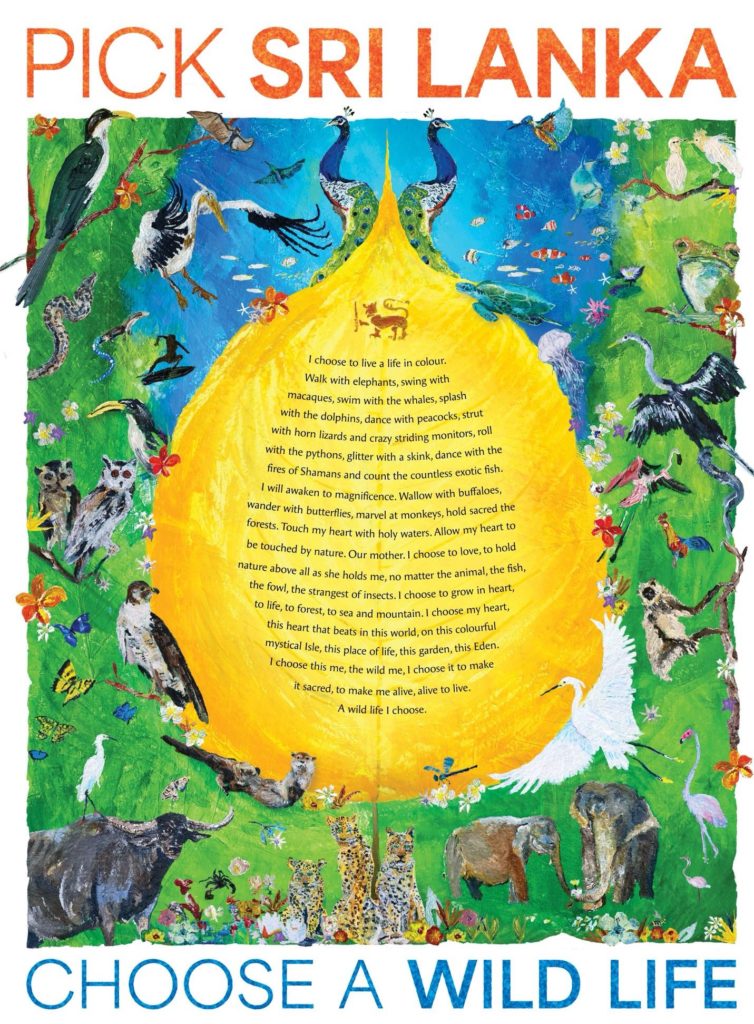
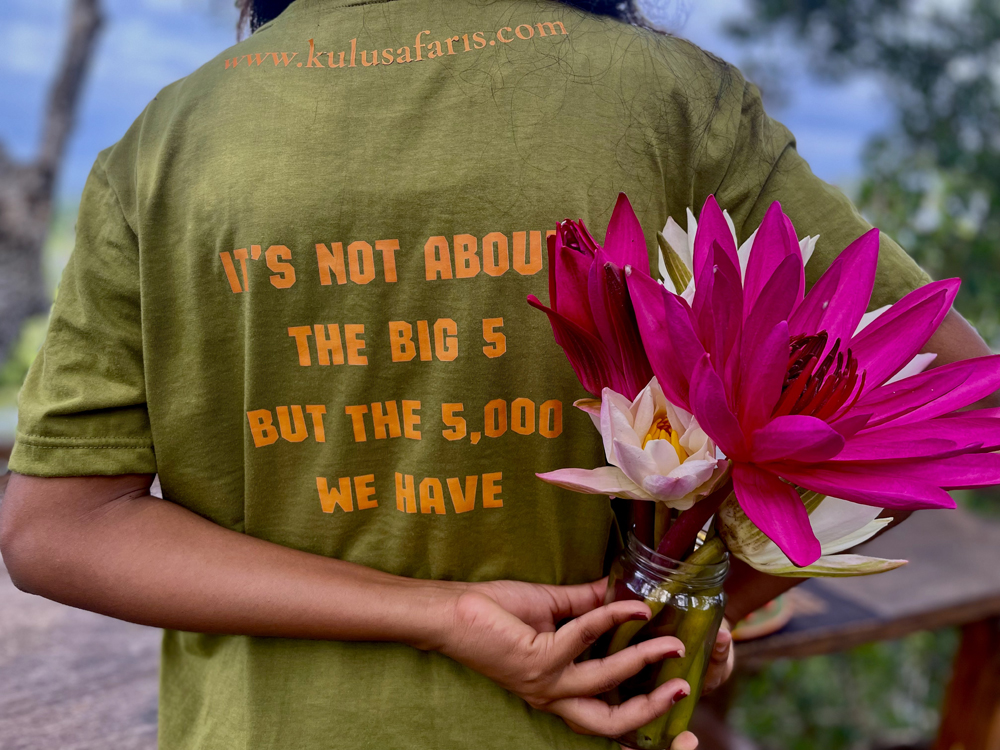
As one of the planet’s richest streams of life, with so many more untold stories, the Sri Lankan school children at Thomas Gall School (TGS) in Galle who painted 100 pictures, produced costumes, and wildlife masks are launching a National Geographic Society on Sir Davids 100th birthday on the 8th of May to make it both truly memorable for the kids and to set a new bench mark for the next 100 years. Their aim being to show Sri Lanka is not just about the big five, but the five thousand other equally amazing species which it is home to, that get over-looked despite also having equally fascinating stories to tell.
You can still visit Our Story with David Attenborough at the Natural History Museum in London. It has now been extended through the summer.
All images © Juliet Coombe, except for the David Attenborough’s images which are © Trustees of the Natural History Museum. Poster designed by Ben Prior and wildlife painting by John Vincent.