
How Photography Became A Lifeline Through Loss
COVID gave me an unexpected gift: time. Time to photograph moments that outlive us. Time I didn’t know would become precious in ways I couldn’t have imagined.


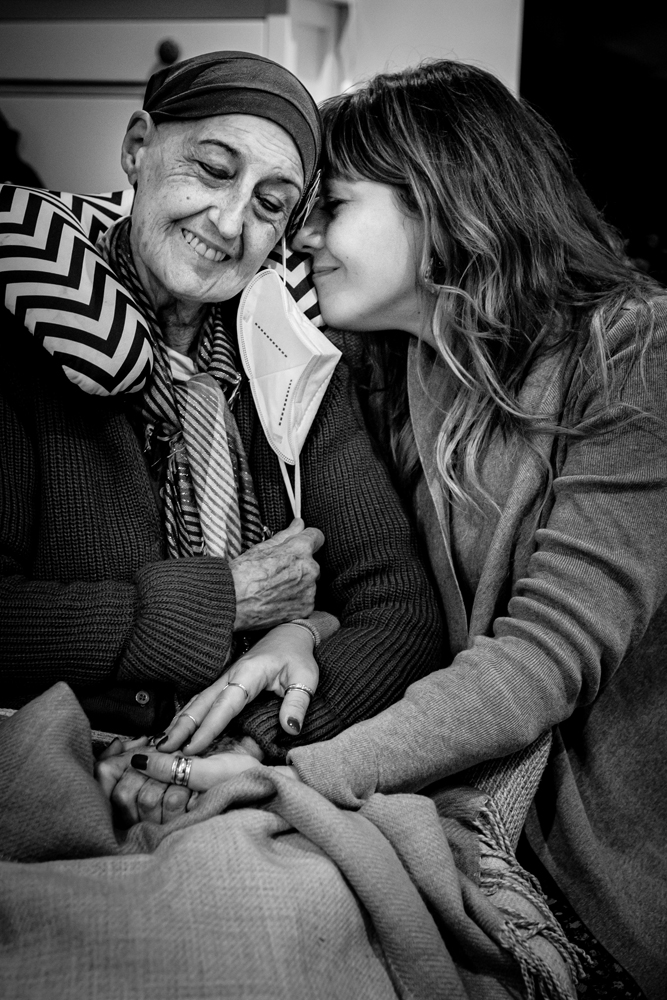
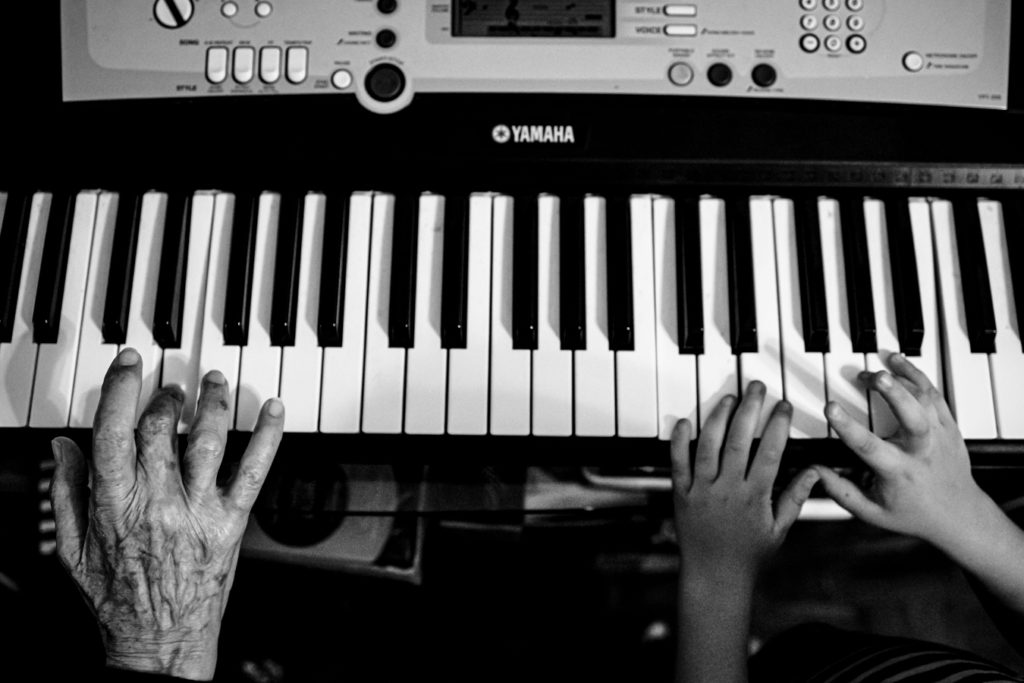
During those strange, suspended months of quarantine, I documented my mother and my son together – the ordinary rhythm of days that felt endless, photos with no poses, no direction, simply them. My son was only three years old. These images, I would come to realise only months later, would be the only way he would remember his relationship with his grandmother. I captured it without knowing I was creating his only tangible memories of her love. What they had was truly special but soon everything would change forever.


When Everything Fell Apart
My mother was diagnosed with cancer in the uncertain aftermath of the pandemic. I was in Dubai, miles away from her back home in Portugal, traveling back and forth between two worlds – one where life continued, and one where it was quietly disintegrating.
COVID had delayed her diagnosis. Time, which had felt so abundant during quarantine, suddenly became all too finite.


I didn’t know how to be a daughter in this new reality. How do you help someone you love when you feel utterly powerless? How do you stay present when the weight of what’s possibly coming threatens to crush you?
The only thing I knew how to do was what I’d always done: I picked up my camera.
The Camera as Survival
Photographing my mother during her illness became my survival mechanism – a way to be close while creating just enough distance to remain sane. Behind the lens, I could see her and her illness from a different perspective. I could try and seek some sort of beauty within the pain. I could break down something unbearable into more digestible but no less palatable pieces.
Each photograph became a small act of transformation. With every frame, I was processing what I couldn’t yet accept, translating overwhelming emotion into something I could hold, something I could look at without completely falling apart.
Through my camera, we communicated deeply without words, and that was enough. Our hearts were connected in silence because sometimes words were too hard, too loaded with fear. We wanted to enjoy the time we had together to the maximum we could, sometimes distracting ourselves with the mundane – a cup of tea, light through a window, our hands together resting in her lap. It was all we needed.
My mother, even through her illness, tried to maintain her role as the heart of our family. She wanted to be the protector, for as long as her strength allowed. It was somehow her way of staying in control of something uncontrollable. And what brought her the most joy was being present for her grandchildren – pouring whatever energy she had left into them.
The camera kept hope alive between us. It created a protective barrier that allowed me to refuse the painful reality in front of my eyes, because accepting it was too overwhelming. The lens was my filter, not to hide, but to survive.
But photographically, I was lost. I had hundreds of images – raw, emotional, deeply personal – but they were clouded by grief. I couldn’t see the story clearly. I was too close, too immersed in the pain. The collection was more therapy than art, more catharsis than coherence.

The Moment Everything Shattered
When she passed, I wasn’t there. I was in Dubai when I got the call. The devastation was absolute.
If you’ve built a healthy, loving relationship with your mother throughout your life, the moment she disappears is truly, profoundly impactful. It was the worst moment of my life.
I lost a part of myself that had been nourished by her love and care, her comforting words when everything else seemed to be falling apart. I had also lost my best friend; the one who would unconditionally be there no matter what. My biggest cheerleader, the one who always believed in me no matter how many times I failed. The one who loved my son in a different way but with the same intensity.
The pain was devastating. But what made it unbearable was that I wasn’t there to say the last goodbye.
The responses from hospitals and doctors were misleading. No one ever said to me, “Say your goodbyes. The time is near. The situation isn’t looking good.” I wish someone had. Even if I could never have truly been prepared, at least I might have been spared such deep shock. In hindsight, everything was there. I just refused to see it. As a result, I carried the heaviest guilt for a very long time.
The Darkest Place
In the months that followed, I was in the darkest place I’ve ever known.
I felt completely alone, disconnected from everything. From life itself. I didn’t know how to see beauty anymore. I felt alone even in full rooms. No one could fill the void.
My body was present, but my mind was stuck in a relentless cycle of memories and anxieties. I drifted through life like a ghost of myself. But within all that pain, there was one love strong enough to save me: my son’s.


I was certain of one thing during the entire process – I wanted to see light again because I wanted to continue her legacy and be to my son what she was, still is, to me.
So I had only one option: not to give up. I had to keep going – for him, for myself, and for the ones around me who deserved a better version of me. Piece by Piece, I Started Building
Photography helped me express what I couldn’t put into words. The love for my son helped me not give up.
Nature helped me heal too. I began mind-mapping my emotions into images, translating grief into visual poetry. The cracks in dry earth became the fractures in my heart. The reflections of sunlight were my fleeting hope. The blurred landscapes were how I saw the world through my tears.
I turned the camera on myself – not out of vanity, or self-importance, but out of necessity. Including myself in the photographs, whether through self-portraiture or subtle representations, became a way to release the grief and pain little by little. With each image, it was as if a tangible piece of the heaviness was lifted.
Art made me break down overwhelming emotions and release them with each image I created. Therapy helped me find self-forgiveness. I had felt utterly helpless, and I had to learn that being human means we don’t always get to say goodbye the way we want to.
Consistency in this process helped me, slowly, very slowly, to see the light again. It was a process almost like a rebirth – a new me without my mom, but carrying all her strength, knowledge, love as her legacy. It’s as if she became a part of me. An imprint instead of an outside voice.


Finding the Story Through the Edit
As I slowly emerged from the darkness, I began the difficult task of editing this body of images. It was agonising – revisiting every frame meant reliving every moment, every memory. But it was also essential.
Initially, the project was about my mother and me. About her illness, my grief, our final chapter together. But as I worked through the edit, something shifted. I began to see a different story emerging – one that wasn’t just about loss, but about continuity. A story about the circle of love passing on from one generation to the next.
My son kept appearing in the images, sometimes with my mother, sometimes with me. And I realized: this wasn’t just my mother’s story, or mine. It was ours, all three of us. It was about how she had loved me, how I now love my son, and how that love – her love – continues through me to him.
The project transformed from documentation of an ending into a meditation on legacy. I was taking on her mantle, stepping into her role for the next generation, carrying forward everything she had given me.


Through this refining process, clarity emerged. I understood that my photographic growth was mirroring my inner growth. The more I healed, the more I could see the story objectively. The more distance I gained from the raw emotion, the stronger the narrative became. I wasn’t just documenting anymore. I was storytelling.
From Edit to Exhibition
The turning point came when I realised these images deserved to exist beyond my computer screen, beyond my private grief. They needed to be seen, shared, experienced.
Transforming an edit into an exhibition was its own creative challenge. I had to think about sequence, about pacing, about how viewers would move through the emotional arc. Which images would open the story? Which would close it? How do you guide strangers – who may or may not have had the experience of losing some close – through your most intimate moments without overwhelming them?
I had finally gathered the courage to show the work. I listened to critique, showed it to several people, worked with mentors. Many liked it – they saw the emotion, the intimacy, the honest documentation. But something was missing. They couldn’t quite see its full potential, and truthfully, neither could I. I was too close to it.
Then someone saw what I couldn’t. They saw beyond the collection of emotional images to the deeper narrative waiting to emerge – the circle, the generational thread, the transformation from ending to continuation. Sometimes it takes just one person to believe in the true potential of your work, to give you that final push that transforms something good into something extraordinary.
That insight changed everything. I refined the sequence repeatedly, restructured the entire narrative, and pushed myself to be brave enough to let others into this deeply personal space. It was like letting people see into my soul. An exhibition demands that you trust your work, and your story, enough to stand behind it publicly.


Creating “Legacy: The Circle of Love and Life” as an exhibition became the final act of transformation. What began as survival photography evolved into art with intention and purpose. It evolved into a story of life and of loss.
Realising the Dream
When I submitted this project to Xposure International Photography Festival, I didn’t dare hope. These were some of the most prestigious stages in photography. Photographers I most admired had exhibited here. Who was I to think my personal story belonged alongside theirs?
But it was accepted!


That moment, seeing my work recognised on an international stage, validated not just the photography, but the journey itself. It proved that our most personal stories, when told with honesty and craft, can resonate universally. It proved that achieve in photography is about belief, self-belief.
Being selected for Xposure wasn’t just a professional milestone. It was confirmation that the darkest periods of our lives can become sources of our greatest strength and inspiration. ,Proof that pain can be transformed into something meaningful, something that connects us to others. It was a tribute and an affirmation at the same time.
It also meant something even more profound: her story lives beyond death. Our story lives. Through this exhibition, my mother’s love, her strength, her legacy reaches people she will never meet, in places she will never go. The images we created together – in her final months, in our silent communication, in our shared refusal to let go – now carry her forward. Carry me forward with her. Death took her physical presence, but it couldn’t take this. And that feels like the most powerful act of love and defiance I could offer.
Giving Direction to My Photography
This project taught me that our most powerful work often comes from our most vulnerable places. That cliche of the most profound art coming from a tortured soul. As a result, I’m now committed to helping other photographers find their authentic voice and trust their personal stories.
Photography isn’t just about technical skill or perfect composition. It’s about courage. The courage to look at what’s difficult, to document what matters, to share what feels impossible to share. It’s about capturing raw and at time uncomfortable emotion.
This understanding led me to deepen my knowledge beyond photography, whilst still using photography. I’m now finalising a course in art therapy and have completed life coaching training, because I believe the intersection of visual storytelling and emotional healing is where transformative work happens. When we understand how to hold space for difficult emotions – both our own and others’ – our photography becomes more than documentation. It becomes a pathway to healing, growth and human connection.
Moving forward, I’m developing workshops and mentorship around what I call “The LENS Philosophy™” – helping photographers look inward to create outward, to engage authentically with their subjects. To narrow their focus to what truly matters, and to share stories with intention and heart.


I want to create spaces where photographers can explore their own emotional landscapes through their cameras, where they can learn that being “too emotional” isn’t a weakness, it’s a superpower.
I Want You to Know…
If you’re reading this and you’ve experienced loss, I want you to know: there is hope, even in the darkest times. Light will shine again – brilliantly – and what remains is the legacy left by those we have loved and lost, the deep imprint they’ve made on our hearts.
If you’re a photographer struggling with whether your personal work is “good enough” or “worthy enough” to share, I promise you, it is. Your story matters. Your perspective matters. Your emotional truth, translated through your lens, is exactly what the world needs to see.
Photography has become more than my profession. It’s become my therapy, my anchor, my way of honouring what I couldn’t bear to lose and of gifting my mother’s love to the next generation.
The Endless Circle
Today, my mother lives in me and through me. Her legacy continues through the love I have for my son, through the everyday memories I create with him and my family, and through my photography.
Personally, I’ve found that my strength as a photographer has grown in direct proportion to my inner growth. The bigger the journey within, the stronger the photographer I become. Because ultimately, it all comes down to intention – the heart and honesty behind every image.
Through my life, I heard I was “too emotional”. That I felt too much, too deeply, that I took things too personally. For a long time, I believed that was a flaw. Now I realise that very trait became my gift and my strength. The perfect imperfection.
I gave myself permission to feel my darkest emotions and translate them into photographs, into art, into visual poetry. Photography gave me a safe place to release all that intensity instead of hiding and suppressing it. It was in that space that my work found its strength.
This body of work, “Legacy: The Circle of Love and Life,” is about more than documenting my mother’s illness or my grief. It’s about transformation. It’s about death and rebirth. It’s about discovering how to live life in ways I never knew before, while rediscovering a new version of myself. It’s about connecting the generations and making a strong loving future from the past.
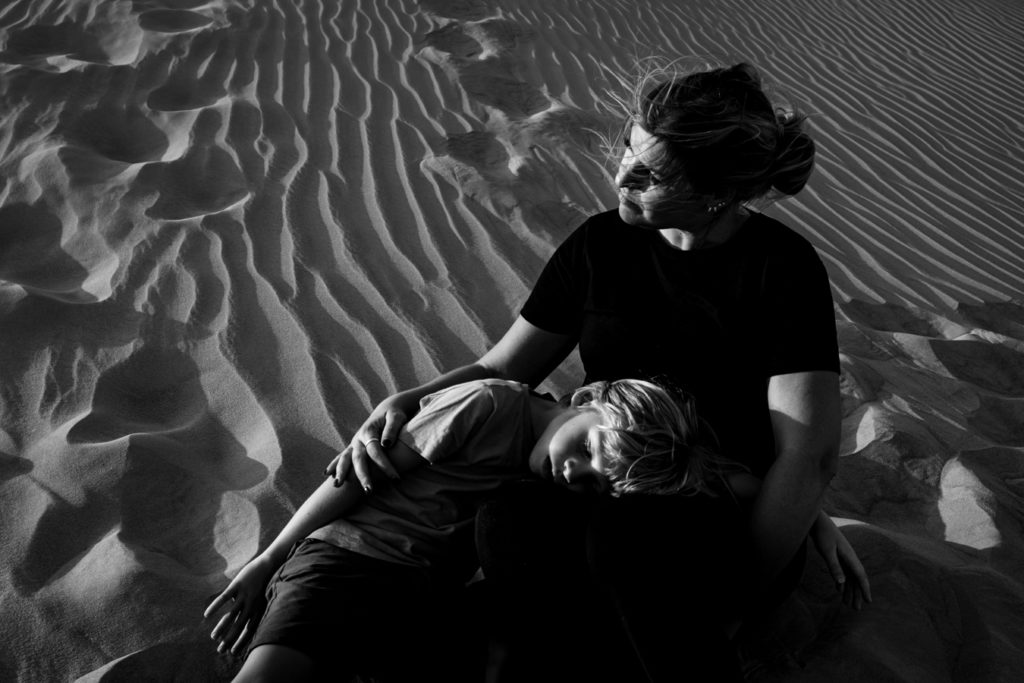
The strength I found within me has doubled, rooted in the love I received from her and now pass on to my son. That love guided me back into the light. Some day it will guide him too.
It’s a circle – the circle of love and life.
Pick up your camera. Document your people – not because they are perfect, but because they are yours. Let those images be bridges to yourself and to the ones you love, because family, in whatever form that takes, is the essence of our humanity. Every moment we have together is not guaranteed. It is a gift.
The present, the now, is all we truly have.


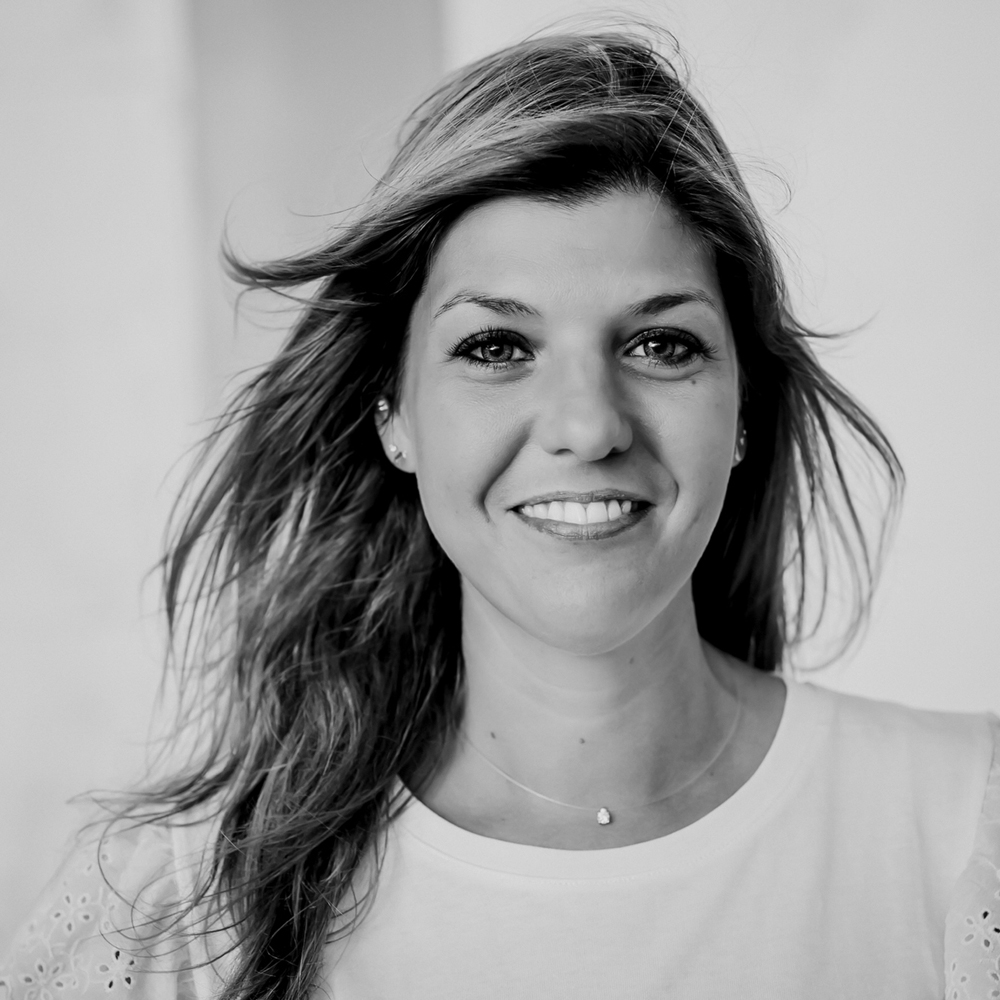
Visit Ana’s website
Connect with Ana on Instagram
Connect with Ana on Facebook
Connect with Ana on Linkedin
