
From coast to mountains in Namibia – The landscape changes
Walvis Bay – Colour Returns
Near Walvis Bay, colour reappears in a gentler form.


Pink salt pans stretch across the landscape, tinted by algae. Flamingos feed here, their feathers glowing softly in the light. Pelicans, seabirds, and nesting colonies fill the air with movement.
Predators are always present. Jackals steal eggs with astonishing precision. Nothing goes unnoticed for long.


After days of boiling heat and sandstorms, the sea and the wind feels strangely refreshing.
When night falls over the Namib and the desert exhales its heat, the sea along the Skeleton Coast begins its silent ritual of remembrance.
The Whispering Tides of the Skeleton Coast
The San once said that this stretch of coastline was the land that God created in his anger – but the elders, who still slept near the dunes, knew a gentler truth. Even anger can have a heartbeat, and even a wild sea can love.
At night, thick fog rolls in like milk and brushes the dunes like fingertips. The tide creeps across the sand with a whispering sound, as if talking to someone who has been gone too long. We all know the legends: sailors swallowed by storms, shipwrecks half-buried like rib cages, whale bones glistening like frost. The Portuguese even called the coast ‘the gateway to hell’. And so it is said that those who wander around at night hear a soft hum, deep and resonant, vibrating through the air. No wind, no waves. Something older. It calls to them, luring them closer to the cold, dark water, soft and hissing. For this is more than just an eerie place of death. It is a threshold. A sacred place where stories, memories and spirits are eternal.
The stories say that the lost are not lost here. That where the sea meets the desert, spirits walk the shore in the hours before dawn. Not bitter, not vengeful. They listen. They wait to guide those with open hearts.
Erongo Mountains – Stories Written in Stone
Returning inland, we reach the Erongo Mountains and the iconic Spitzkoppe. Granite giants rise from the plains, glowing pink, violet, and ochre depending on the light.


This is Damara land. Sacred land.
The rocks invite climbing. Their rough surface grips your hands and feet, offering incredible views. But access is carefully controlled now. Too many rock paintings were damaged in the past. Most sites can only be visited with a local guide.
And that is a gift.
The guided walk becomes more than a hike. It is a lesson in history, spirituality, and survival.
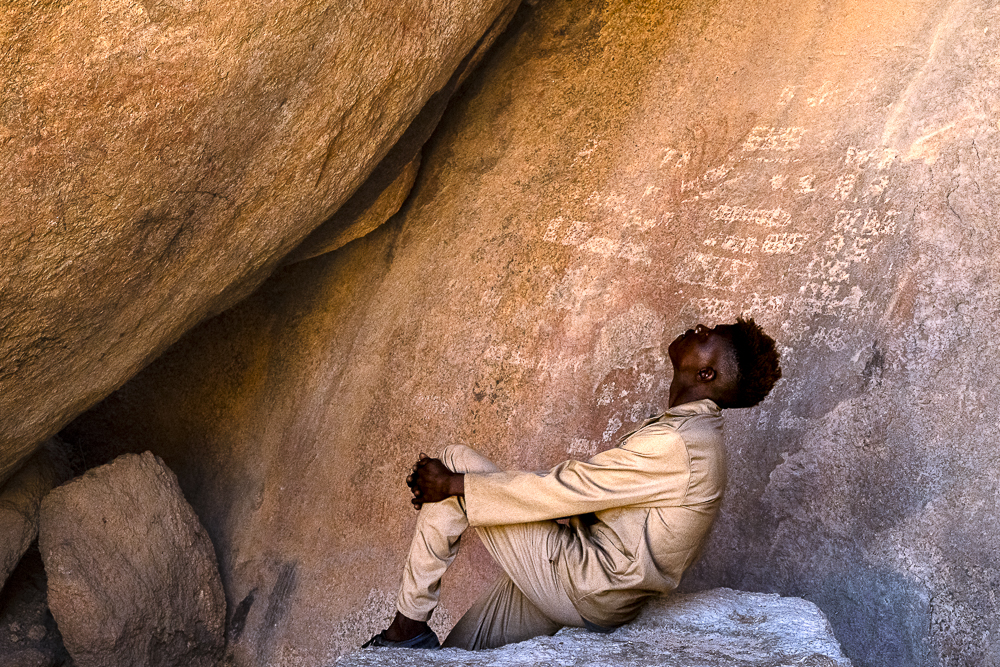
Medicinal plants. Ancient symbols. Stories passed down orally for generations.
During the day, rock hyraxes sun themselves on warm stone. At night, the landscape comes alive again — jackals calling, hyenas moving silently, small antelopes appearing briefly in torchlight.
Evenings are simple and perfect. Sitting on warm rock with a cold beer, watching the sun disappear. Later, a campfire. Darkness. Stories.
Beneath Namibia’s endless sky lies a place that has touched the hearts and souls of people for centuries: Spitzkoppe.
Where the Ancestors Watch over You
For the Damara people, it is far more than a majestic rock formation – it is a sacred place where the spiritual and earthly worlds meet, like old friends resting in the shadow of eternity.
It is said that on quiet nights, when the wind gently sweeps across the sand, you can hear the whispers of the ancestors. Their spirits live deep within the rocks, hidden in narrow crevices and warm granite layers.
They watch over the land, the people, the animals – every story has been created under this vaulted sky. Some call it magic, others call it faith. For the Damara, it is both. In earlier times, the spiritual leaders of the Damara travelled here under the influence of the full moon. They sat at the foot of the rock, lit sacred fires and sought advice from the spirits. It was a moment of awe and connection with the desert, which spoke not with words, but with wind and light. If you are quiet enough to listen, it tells you stories of connection, awe and trust.
A place where the soul can rest because it feels: I am not alone here, I am part of something greater.
Final Days – Perspective from Above
The last stage takes us toward Windhoek, north of Okahandja, into the Dusternbrook region. Rolling hills, bush savannah, thorny trees. Cattle farms transformed into guest farms and private reserves — a response to climate change, drought, and the need for sustainability.
My final nights are spent overlooking a waterhole. Water is everything here. Animals come and go constantly — springbok, oryx, wildebeest, zebras. Giraffes move like slow silhouettes. Rhinos appear silently. Even bat-eared foxes pass through briefly.

One last flight — this time in a gyrocopter — offers a final overview. The evening light is perfect. Long shadows stretch across the land. Photographing from the air is challenging; the shadow of the aircraft often ruins the composition. Sometimes it feels like *ET on a bicycle* drifting through the frame.
I smile and let it go.


Closing – What Remains
As the journey ends, Namibia leaves me with something rare: perspective.
This is not a destination defined by abundance or spectacle. It is defined by patience. By light. By distance. By restraint.
Here, landscapes are not scenery — they are memory. Open, exposed, uncompromising. Life adapts, not dominates. Death is visible, honest, part of the rhythm.
As a wildlife photographer, Namibia taught me to slow down. To look longer. To accept that not every day delivers drama — but every day offers meaning.
When I leave, I know I was only a brief witness. A passing observer in a land that has endured for millions of years.
Namibia does not ask to be admired.
It asks to be respected.
Camera equipment:
- Nikon Z9
- Nikon Z8
- Nikkor Z 400mm f2,8
- Nikkor Z 70-200 f2,8
- Nikkor Z 24-70mm f2,8
- Nikkor 14-24mm f2,8
Photography Tips – Field Notes from Namibia
1. Let the light dictate the day
In Namibia, light is the main subject. Wildlife, landscapes, and even human traces only become meaningful once the light arrives. Plan everything around sunrise and sunset. Midday is rarely generous — use it for scouting, resting, or simply observing how shadows move.
2. Start early. Stay late. Accept the exhaustion.
The best moments often happen when the body would rather sleep or stop. Early mornings bring calm air and soft colours; evenings stretch shadows and reveal texture. Long days are not optional here — they are part of the process.
3. Think in layers, not in subjects
Namibia is not only about isolated animals against clean backgrounds. Look also for relationships:
an oryx framed by dune lines, seals surrounded by fog, birds against salt pans. Foreground, subject, and background matter equally.
4. Photograph restraint as much as action
This is not East Africa. There are fewer animals, and they move with intention. Waiting is productive. Stillness tells stories. A single springbok crossing an empty frame can say more than a herd in motion.
5. Respect distance — ethically and visually
Many species here survive through energy conservation. Pushing closer often destroys the very behaviour you came to photograph. Long lenses are not about dominance, but about respect.
6. Embrace imperfection
Wind, sand, fog, and aircraft shadows will interfere. Let them. Some of the most honest images come from conditions you cannot control. Perfection is rarely truthful in the desert.
7. Work with dust, not against it
Dust is constant. Protect your gear, but don’t fear the atmosphere it creates. Backlit sand, haze, and particles often add depth and mood — especially during golden hour.
8. Use midday for details
When the sun is harsh, shift focus. Tracks in the sand, cracked earth, insects, textures, rock patterns. Namibia rewards photographers who stay curious when the light is unforgiving.
9. Learn the rhythm before lifting the camera
Watch first. Animals, clouds, fog, wind — everything follows patterns. The longer you observe without shooting, the more intentional your images become.
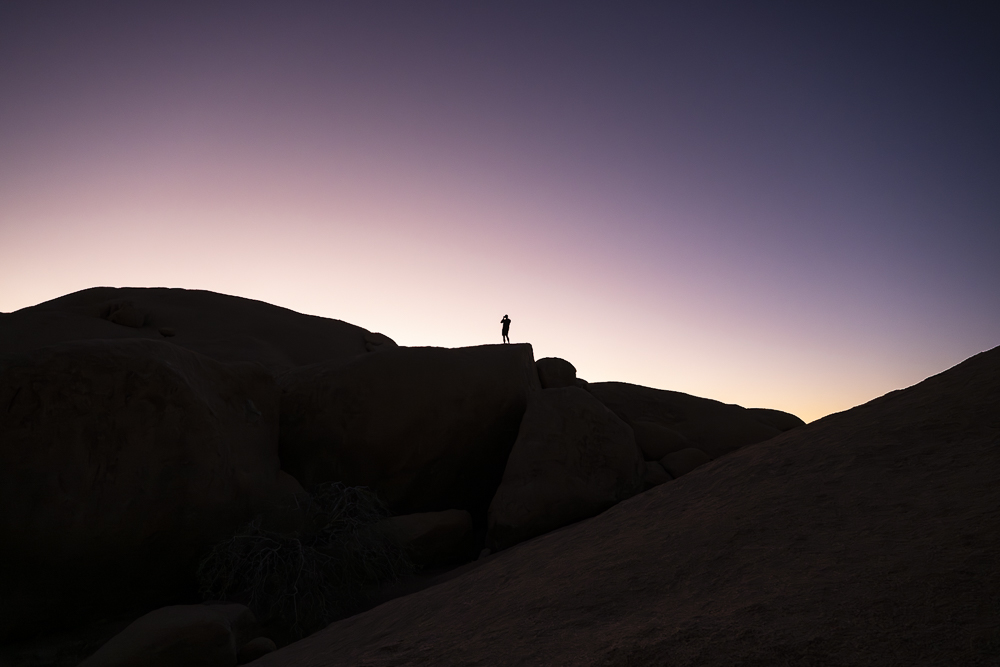
10. End the day without rushing the image
The moment after sunset is often overlooked. Colours fade slowly here. Stay. Pack up last. Some frames only exist when most people are already gone.
Previously…. A Journey Through Earth’s Memory – One
All images © Silke Hullmann
Read Silke’s other articles – Perspectives on Wildlife and Aerial Perspectives
To see more of Silke Hullmann’s photography visit her website
Or follow her on instagram @silkehullmann
