
In touch with nature
It’s puffin time! You can immediately see that from the sudden explosion of photographs of these colourful and sometimes comical birds on social media. They are nesting and raising their chicks – pufflings – around the coast of the UK from May to July, along with many other seabirds.


On a recent visit to the cliffs near Flamborough Head in the East Riding of Yorkshire, I lost count of the number of times I was asked “Have you seen any puffins?”. In truth I had but there is much more to see there than just puffins.


The colourful puffins are surprisingly hard to spot
The cliffs and coastal path through Bempton
The coastal path along the cliffs runs from Flamborough to Filey – a distance of about 14 miles. It’s part of the King Charles III England Coastal Path. At the heart of it is RSPB Bempton Cliffs. The RSPB is the Royal Society for the Protection of Birds. It’s a wonderful spot and very popular with nature lovers of all ages.
It’s the section of this coastal path where you’ll see the most of the seabirds from April through to August on, around and above the 400ft chalk cliffs. They are home to many species; North Atlantic Gannets, Razorbills, Guillemots, Shags and Fulmars, as well as Kittiwakes and several gull species, all in addition to the Atlantic Puffins.
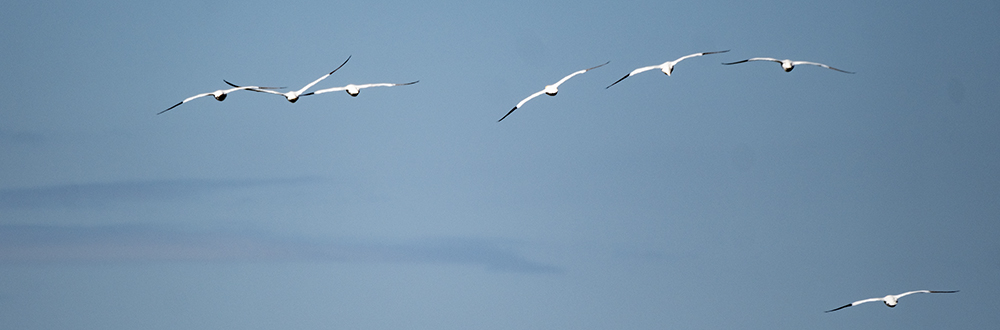
At Bempton you get surprisingly close to the seabirds. The path here is fenced , unlike most of the rest of these fragile cliffs, with plenty of viewing platforms so you can get close without the risk of falling or the cliff edge collapsing. It’s a dream for photographers and you’ll lots of them there with their long lenses and, for some bizarre reason, many of them in Camouflage gear.


Viewing platform and research on the cliffs
A seaside spectacle
By early June the nests are mostly built but the chick are only just beginning to hatch. The pufflings are still egg-bound.
Imagine the air filled with seabirds, the noise, the movement and, on hotter days a distinctive scent filling the air. It’s a mesmerising sight, that’s rarely the same on two days running. The weather conditions and wind direction play a big part in the flight patterns of these birds, and when they take the air or raft on the sea.


There are many different species on the cliffs – Herring Gull, Gannet, Razorbills and Guillemot
The most prevalent bird at Bempton is the North Atlantic Gannet. Over 50% of the UK’s population come to these cliffs and it is quite a sight when they’re all at Bempton. They’re quite big birds but incredibly agile on the wing. Flying into it they almost hover in front of you, often at eye level. Flying with the wind they are like missiles flashing past you.
The topography and the action
The Cliffs weave in and out but the overall orientation is towards the north east. In summer the sun rises out to sea, moving clockwise during the day and setting behind you to the north west. This gives a dramatically changing landscape. If you want to photograph the birds on some parts the the cliffs, most notably Staple Newk – the southern-most viewpoint – then you need to be there in the morning. Later in the day the sun/light goes off the most interesting aspect of the cliff below.


The Gannets life at Bempton
Changing weather provides lots of opportunities and there isn’t a bad time to go to Bempton. Even a stormy day has its own charm. You may think you need a calm sunny day but, provided you’re dressed accordingly, the windiest and cloudy days can produce some of the most delightful and unusual photographs. It can be challenging, though, and capturing the birds’ aerial acrobats in a strong wind doesn’t make for easy photography. Be prepared to have lots of failures and missed shots.
Looking for more than puffins
Whilst you can see puffins at Bempton, there are only about 3000 there – compared to ten times that at some other places – and they’re spread out along the whole cliffs from Flamborough to Filey, not just at Bempton. They nest down on these cliffs too, to stay safe from predators, so are not always easy to find. With binoculars you may get a good view but getting a good shot requires a keen eye, most likely a long lens and a lot of patience.


The noisy and sometimes comical Razorbill, in flight in the wind
Similar in size, and also in the way they fly, are Razorbills. Even though they don’t have the colourful plumage, feet and beak of puffins – they’re mostly black with some white and a white breast – these little characters will surprise when they open their beaks. They’re bright yellow inside. You’ll find them near the cliff tops too so they’re easy to observe and photographs.
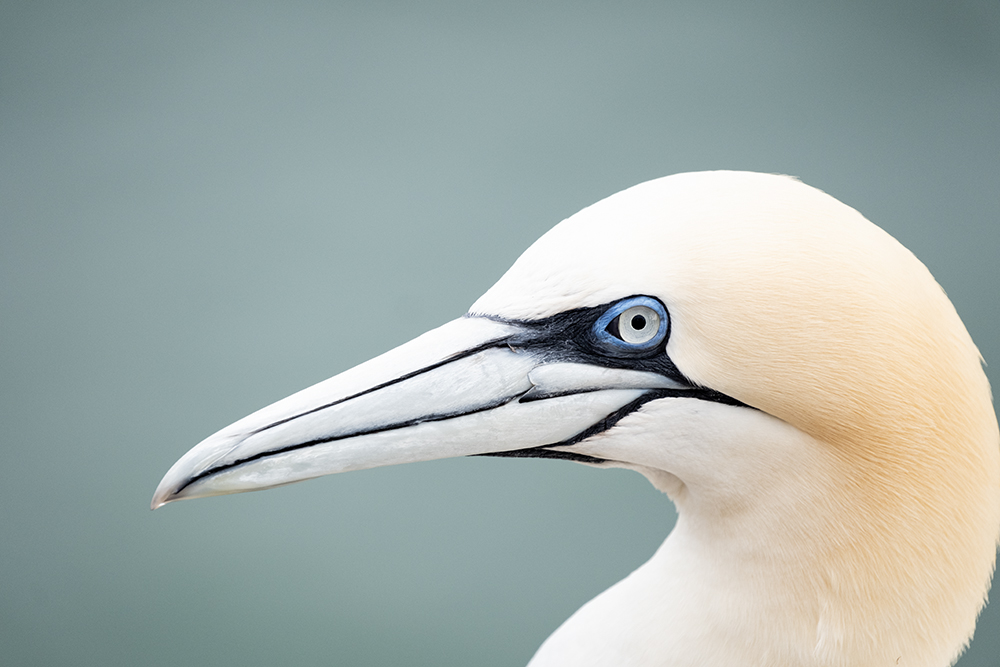
A beautiful adult gannet with distinctive blue iris
Gannets are striking birds. Pure white, at least when mature, but with orangey beige – perhaps ginger – plumage on their head. This contrast with a silvery beak and a bright blue ring around each eye – the iris. Interestingly during bird (avian) flu, many of those gannets which survived had one blue eye while the other turned brown. Scientists discovered that this was a marker of resistance to this disease.
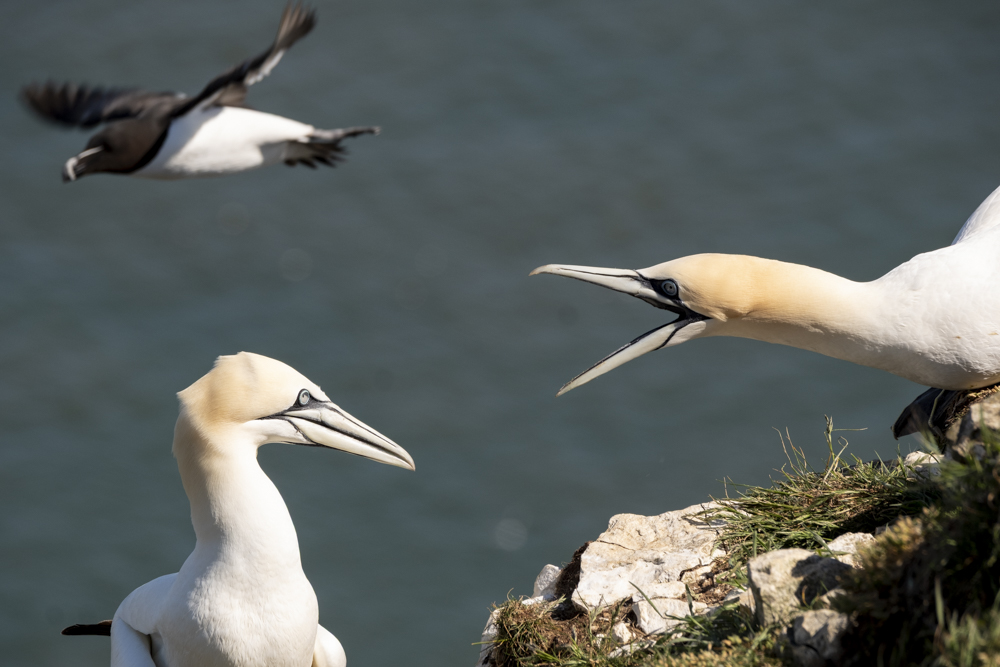
Bickering Gannets
In flight, gannets are surprisingly agile. They react and respond remarkably to wind gusts and eddies caused by the cliffs, managing to land on the smallest of ledges despite the challenging conditions. Hours spent observing them are never hours wasted.


The life of Gannets
Look up, look down, look ahead
Watch out, too, for birds on the water. Whilst they are usually much further away, their behaviour is often fascinating. Perhaps the best way to see this, though, is actually from the water. Boat trips go out from nearby Bridlington on most days and are particularly interesting when the gannets are diving to feed on a shoal of fish.


Views from the cliffs
They’re behind you!
As incredible as the seabird are, to only focus on them is to miss a big part of what Bempton has to offer. Even when you’re looking out to sea you can’t fail to notice that you’re being serenaded. Turn around and you may see the producers of the most melodic song – the skylark. They aren’t the most beautiful of bird – beige sometimes with a crest on their heads – but their chorus is breath-taking and incessant.


The meadow birds – Sotted Flycatcher, Skylark and Meadow Pippit
The meadows and fields flanking Bempton host a wealth of birdlife. Using a birdsong detection app I captured the songs of fourteen different bird species in less than two minutes – Dunnock, Wren, Blue Tit, House Sparrow, Tree Sparrow, Chaffinch, Goldfinch, Chiffchaff, Yellow Hammer, Blackbird, Song Thrush, Great Tit, Meadow Pippit as well as the Skylarks. They aren’t all so easy to see and even harder to photograph.
Watch out for the owls
For many the really treat of the day is the owls. There are resident Barn Owls. You’ll see a couple of nesting boxes if you look carefully. Weather and wind conditions permitting, you’ll see them hunting over the meadows. It’s not uncommon to see them catch a field mouse or vole. They are out hunting in first light (that’s very early in the summer months) and in the hour or two before sunset. So there’s still enough light to photograph them.

The majestic Barn Owl
These silent predators are extremely graceful. The number of people at Bempton drops early evening so they can come remarkably close, if you stay still and silent. It’s quite an experience just to watch them. If you get a good photograph it’s a bonus, but it is possible. In Spring and Autumn, Short Eared Owls migrate through Bempton. They are much bigger than the Barn Owls but also graceful in flight.
Photography at Bempton
Photography in a place like Bempton Cliffs is a great way to test and develop your photographic skills. It challenges you in a broad sense to observe and to capture wildlife and landscape images. But whilst doing this you’ll do action shots, portraits and panning, telephoto and wide angle, and you’ll need to be bold with your compositions to get shots which are different from everyone else’s.
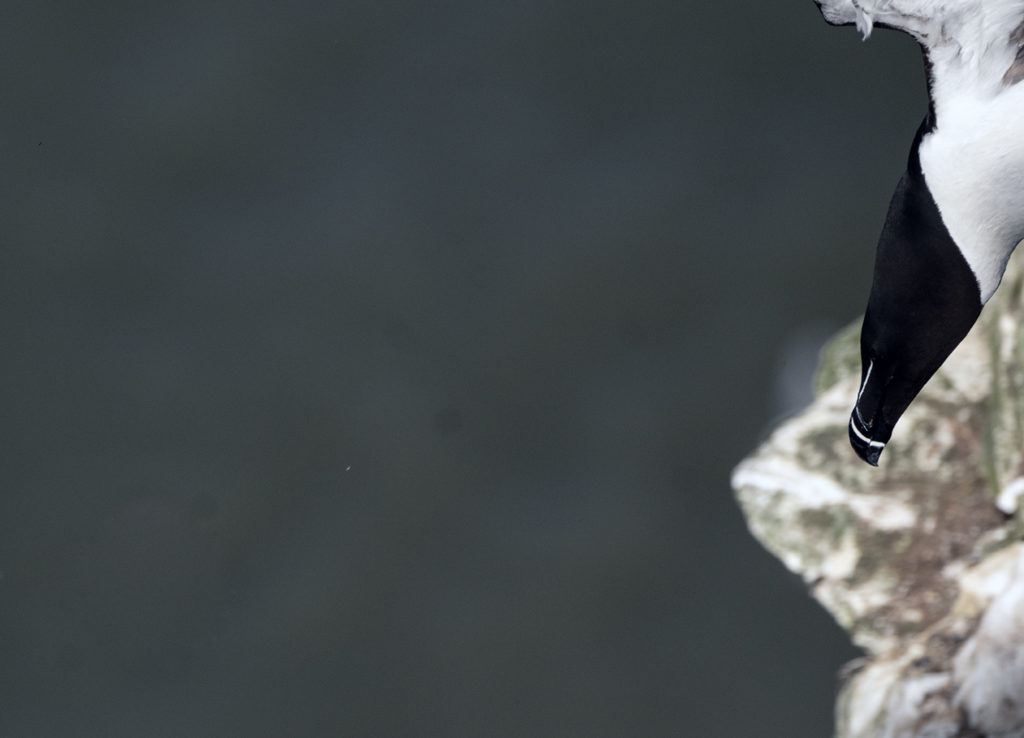
Experimenting with composition and a Razorbill
Once you have some shots in the bag, it’s a great place to experiment with compositions and creative techniques. There is so much happening all day long. So many shapes and colours to play with. Some will work, some won’t, but it’s great fun testing your skills.
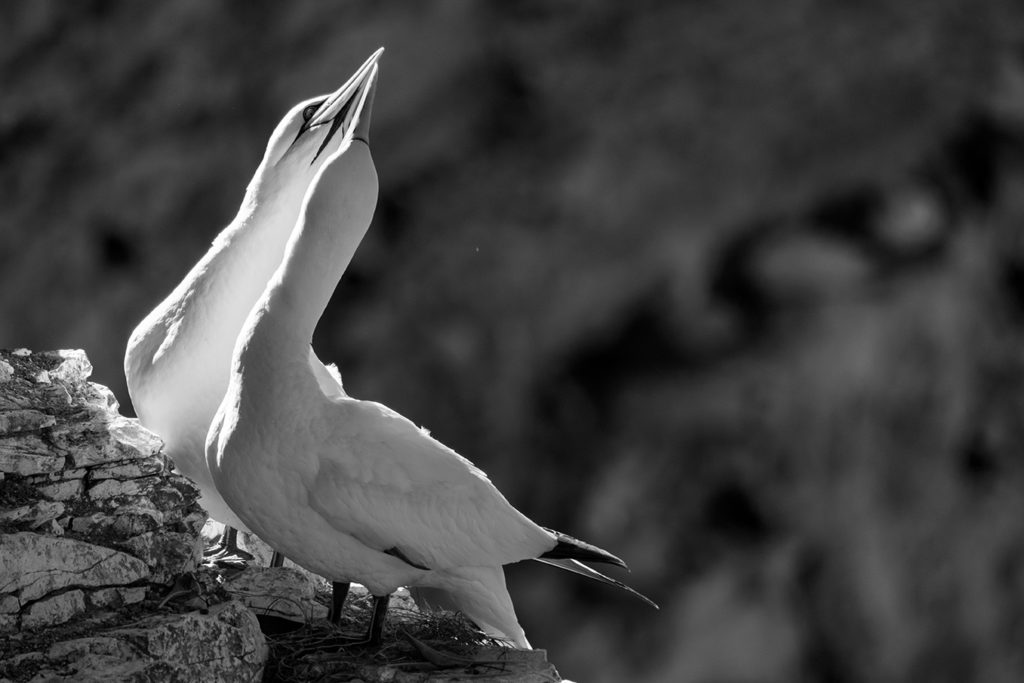
Black & White can be very effective – the gannet dance
A great place to visit
Bempton Cliffs is always a fabulous place to visit even if you aren’t a photographer. On some days there’ll be lots of people there especially during the nesting season, but into the evening it gets much quieter and it’s accessible for everyone. There’s lots for kids to do and even if you’re mobility is impaired, the paths along the cliff top give you access to all six main viewing platforms.
Life on the cliffs is diverse and vibrant. It’s all there for you to see and, with a little patience, to photograph. To enjoy it most, take time. Your patience will be rewarded, both with great sighting and, if you’re prepared for the frustration of missed shots, some good maybe even great photography.
All images © Chris Coe
Read other features about shooting On Location on Eye for the Light
Find out more about visiting RSPB Bempton Cliffs
Join the RSPB and support them, plus gain free access to other RSPB sites
