
Finding authenticity in photography
For many years it was assumed that a photograph was real unless it was proved otherwise. The camera never lies. Sadly nowadays there’s been an erosion of trust – it is all too frequently assumed that the photographer has cheated, the image has been manipulated or montaged on the computer, or worse still generated by AI. It’s a sad reflection of the lack of trust in our society and the prevalence of manipulation of the truth which we all encounter daily. One wonders where we go from here to re-establish faith in truth.
It’s fair to say, outside of documentary, news and war photography, that most photographers strive to make whatever they’re photographing look as good and impactful as possible. And there’s nothing wrong with that. The divide in photography starts with image manipulation. Cropping, removing or de-emphasising elements, changing contrast and tone etc. These have always been part of photography and were achievable in the darkroom or by retouching.
The same software on your computer or phone used to do this also allows you to do much more than these basic changes. It can be argued that many of us fall into doing more manipulation that we should, not because we need to but because we can, often to the detriment of the image. There are also cultural elements at play here. An obvious example is colour saturation. Contrast images from the Far East with those from Europe – the level of colour saturation will immediately stand out. In Asia, colour saturation tends to be much higher as a cultural taste. It’s an element which needs to be used with caution as over-saturating colours tends to make an image look unnatural or unreal, often too contrasty too.
In recent years, the sophistication of digital imaging software has increased exponentially. For year’s elements like sky replacement and de-noise have been possible. It’s at this point that image optimisation starts to stray into generative manipulations. Next stop generative AI.
Many of you will have seen the Iceland ads to commission a “non-photographer’ to photograph Iceland. It’s a clever marketing gimmick. Undoubtedly Iceland is beautiful with stunning landscapes and attractions so maybe the lucky chosen photography virgin will get the odd good shot. I’m sure it will generate lots of publicity but it’s also really insulting to photographers who have spent years and years learning and refining their skills. The destination marketing has fundamentally misunderstood the power of photography. If Iceland were brave enough, they would also send a professional photographer alongside the non-photographer, then we can see the difference. This is especially relevant as it’s big destination for photographers and photography workshops. Maybe we should all just use AI and not visit Iceland? But I digress.
The AI debate rages on. For many photographers it is a step too far. Photography is a craft and a skill. Contrary to what many people think it’s not just about point and shoot with a good digital camera – no talent needed! It’s an interpretation of what we see of an imperfect world. That interpretation is personal not formulaic.
It’s about time and light. In many situations timing is everything. It’s also about a vision and interpretation. That is why good photographers pre-visualise their images before they even get the camera out of their camera bag. Both a non-photographer and AI fall down here as neither are capable of doing that with vision and passion, whilst including “soul” in their images.
Whatever your position on photography and AI, there is no doubting that image manipulation and AI have created a problem for photography, and it’s one of believability. The best, most skilful images are now often doubted.
The image below was made by photographer Krystal Chryssomallis. She joined a group of photographer to photograph Boeing’s test pilots pushing the limits. There were some top aviation photographers in this group but this image of Krystal’s was selected by Boeing from this shoot as their image of the year.
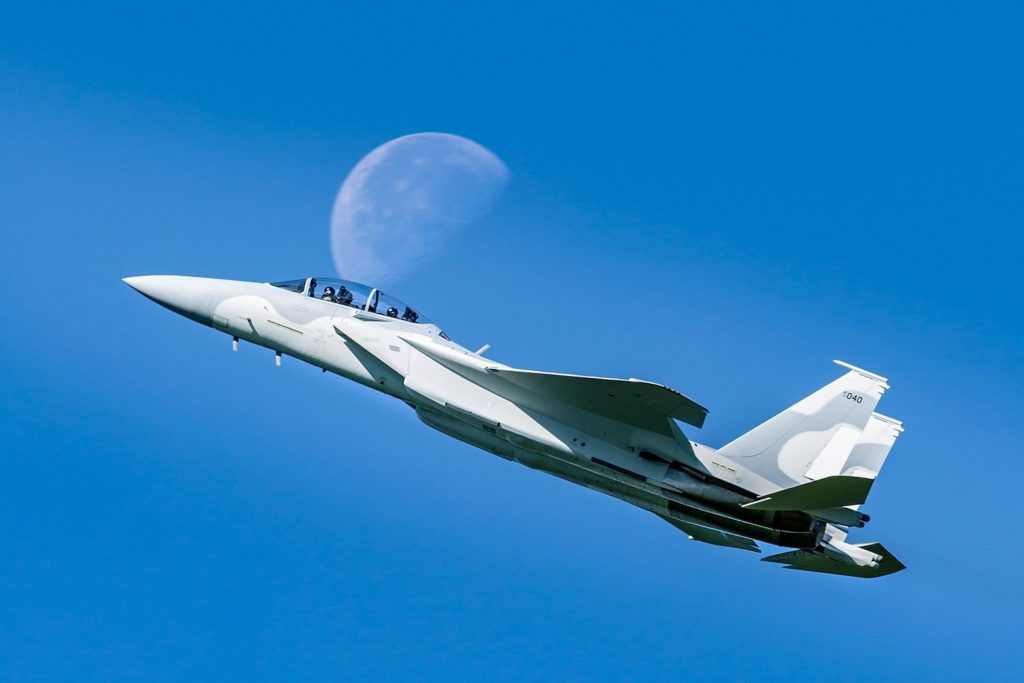
Jet in front of the moon © Krystal Chryssomallis
Krystal captured more than just a jet in this image. It has more than just a documentary record of a moment. It resonated with Boeing, so much so that the prints hangs on the wall of.the Boeing president’s office and was used throughout the company as a screensaver. It has since secured Krystal a number of commissions with the company..
The most common question which Krystal has been asked about this image since isn’t how did you visualise and position yourself to capture a shot of high speed jet in front of the moon. It’s “is it real”! Immediate doubt about the image’s veracity simply because it required more than just pressing the shutter. It required thought, visualisation and a considerable the degree of to get this photograph!
Yes, it’s real and it is this skill and preparation that distinguishes the best photographers from the others, and dare I say from AI too.
The depth of the problem for photography is illustrated not just by the “is it real’ question but by the fact that the pilots themself also asked if it was photoshopped. So it’s up to us to keep making images in camera which show all the qualities of fine photography, regardless of the subject. That’s food for thought next time we think that the best photography isn’t human driven. It always is.
Image © Krystal Chryssomallis
To see more of Krystal’s work visit her website or visit her instagram
Read other Photomouth opinion pieces on Eye for the Light
